Calculate Car Loan Interest: Benchmarks and Negotiation

Before you sign anything, run the amortization formula (or a trusted calculator) on the dealer’s quoted APR. Plug in your loan amount after down payment and trade-in, the APR, and the term in months. You get two numbers that matter: your monthly payment and your total interest over the life of the loan. Then compare that APR against mid-2026 credit-tier benchmarks from Experian to see whether the dealer’s rate is fair or padded.
TL;DR for buyers at the desk:
- A prime-tier buyer (score 661–780) should expect roughly an APR near typical market benchmarks for new cars in mid-2026. Anything notably above standard rates deserves a direct challenge.
- On a $25,000 loan at market-typical mid-2026 rates over a medium term, total interest runs in the several-thousand-dollar range — that’s your baseline for comparison.
- Your negotiation target: the credit-tier benchmark rate, or within 50 basis points of it.
Table of Contents
- How to calculate car loan interest: the amortization formula
- What to enter into a loan calculator to get accurate results
- How to compare a cash rebate against a low-APR offer
- Mid-2026 APR benchmarks by credit tier
- How to negotiate the APR at the dealer
- If the dealer won’t move on the rate
- Baywall gives you a target APR before you sit down
- Key Takeaways
- The case for a personalized benchmark over a rule of thumb
- Sources and further reading
How to calculate car loan interest: the amortization formula
The amortization formula, not a simple-interest shortcut, is the correct way to calculate monthly car payments and total interest. Use it directly or let a validated calculator do the arithmetic.
The formula for monthly payment (PMT):
Payment = P × (r(1+r)^n) / ((1+r)^n − 1)
Where P = loan principal, r = monthly rate (APR ÷ 12), and n = term in months. Total interest is then: (Payment × n) − P.
Here’s a worked example using realistic mid-2026 numbers:
- Loan principal: $25,000 (after down payment and trade-in)
- APR: 6.70% → monthly rate r = 0.0670 ÷ 12 = 0.005583
- Term: 60 months
- Monthly payment: $25,000 × (0.005583 × (1.005583)^60) / ((1.005583)^60 − 1) ≈ $491.29
- Total paid: $491.29 × 60 = $29,477.40
- Total interest: $29,477.40 − $25,000 = $3,771.55
Cross-check this against the lender’s amortization schedule. If the numbers don’t match within a few dollars, ask the finance manager to show you the schedule line by line.
Pro Tip: Most U.S. auto loans use daily simple interest on the outstanding principal. Paying even $50 extra per month early in the loan reduces the principal faster and cuts total interest more than most buyers expect.
What to enter into a loan calculator to get accurate results
A reliable auto loan calculator needs more than just the sticker price and APR. Missing inputs produce misleading monthly payment figures that don’t reflect the real deal.
Required inputs:
- Vehicle price (before any incentives)
- Down payment (cash you pay upfront)
- Trade-in value (reduces financed principal)
- Amount owed on trade-in (negative equity rolls into the loan)
- Sales tax (varies by state; may apply before or after trade-in credit)
- Title, registration, and dealer fees (taxable vs. non-taxable differs by state)
- APR (use the dealer’s quoted rate)
- Loan term in months
| Input | Example Value |
|---|---|
| APR | 6.70% |
| Term | 60 months |
Sales tax treatment is the most common input mistake. Some states apply tax to the full vehicle price before subtracting the trade-in; others apply it after. Always confirm your state’s rule before locking in a calculator output. A loan amortization calculator that handles taxes and fees separately gives you the clearest picture of what you’re actually financing.
Pro Tip: Use the quoted interest rate (not APR) when you want to isolate interest cost only. Use APR when comparing total loan cost across lenders, because APR folds in fees that the raw rate ignores.
How to compare a cash rebate against a low-APR offer
Cash rebates and low-APR financing are competing offers, and the right choice depends entirely on the dollar difference over your loan term. The method is a side-by-side total-cost comparison.
Option A: Low APR, no rebate. Option B: Standard APR, $2,500 rebate applied as a principal reduction.
| Option A (Low APR) | Option B (Rebate) | |
|---|---|---|
| Rebate applied | $0 | $2,500 |
| APR | — | 6.70% |
| Term (months) | 60 | 60 |
In this example, Option B saves roughly $1,700 over the loan despite the higher APR, because the rebate cuts the principal by $2,500. The break-even point: a rebate must exceed the additional interest the higher APR generates over your term. Run both scenarios in a calculator like Investopedia’s auto loan tool before deciding.
Pro Tip: If you have strong investment options for the rebate cash, factor in opportunity cost. For most buyers without a clear investment plan, the dollar difference over the loan is the only number that matters.
Mid-2026 APR benchmarks by credit tier
Experian’s mid-2026 data provides typical new-car APRs for various credit tiers, showing a substantial spread between top and low credit quality borrowers. That spread translates to significant differences in total interest costs for the same vehicle.
| Credit Tier | Score Range | New-Car APR |
|---|---|---|
| Super-prime | 661–780 | low single-digit percent typical |
| Prime | 661–780 | moderate single-digit percent typical |
| Near-prime | 661–780 | mid-single-digit to low double-digit percent typical |
| Subprime | — | low to mid double-digit percent typical |
| Deep subprime | — | mid to high double-digit percent typical |
Your benchmark is the rate for your tier. Several factors can push your actual rate above or below it: debt-to-income ratio, vehicle age (used cars carry higher rates), loan term (longer terms often mean higher APRs), and lender type (credit unions typically beat dealer-arranged financing). Set your negotiation target at the benchmark rate or within 50 basis points above it. Anything higher is worth challenging directly.
How to negotiate the APR at the dealer

Knowing your benchmark is only useful if you use it at the desk. The buy rate vs. sell rate gap is where dealers make money on financing. Lenders set a base buy rate; dealers can mark it up and keep the difference. Your job is to close that gap.
Questions to ask:
- “What is the buy rate on this loan?”
- “Is the rate you’re quoting me the lender’s rate, or has a markup been added?”
- “Can you show me the written finance offer from the lender?”
Dealer tactics to watch for:
- Payment packing (adding products to inflate the monthly payment without disclosing the APR impact)
- Confusing trade-in and purchase price into one negotiation to obscure the rate
- Conditional approval language (“your rate might change after processing”)
Negotiation script:
- “I’ve checked mid-2026 benchmarks for my credit tier. The market rate for a buyer like me is around [X]%. That’s the rate I’m working toward.”
- “Can you confirm the buy rate from the lender and show me where the markup sits?”
- “If we can’t get within 50 basis points of [X]%, I have a preapproval from my credit union I’ll use instead.”
A sensitivity table showing the dealer exactly how much a 1% APR difference costs you in total interest over 60 months turns an abstract negotiation into a concrete dollar conversation.
If the dealer won’t move on the rate
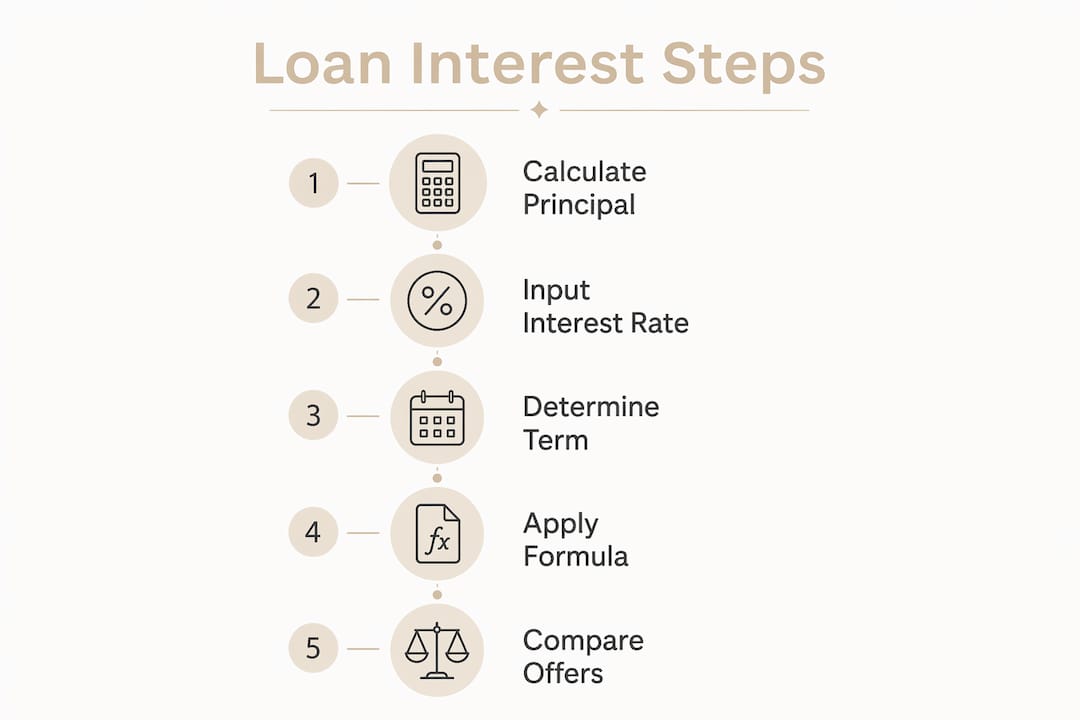
When the dealer’s APR stays above your target, you have real alternatives. Get preapproved before you walk into any dealership.
Alternatives, in priority order:
- Credit union financing — typically offers rates at or below Experian’s prime benchmarks; apply before the dealer visit.
- Online direct lenders — faster approval, competitive rates, and a written offer you can bring to the dealer as leverage.
- Co-signer — a co-signer with a higher credit score can move you into a better tier and cut your APR materially.
- Refinance after purchase — if you’re in a time crunch, accept the dealer rate and refinance within 6–12 months once your credit profile improves.
Decision checklist:
- Is your credit score within 20 points of the next tier? Work on it before buying.
- Do you have a preapproval letter in hand? Bring it to every dealer.
- Is the dealer markup above 100 basis points? Walk to your credit union.
- Is urgency forcing your hand? Accept and refinance; just confirm there’s no prepayment penalty.
Check any preapproval paperwork carefully for buy-rate vs. sell-rate language. Some lenders allow dealers to mark up even preapproved offers.
Baywall gives you a target APR before you sit down
Knowing the benchmark tier rate is a starting point. Baywall converts it into a personalized number tied to your exact credit score, vehicle, loan amount, term, and location.
Enter your dealer’s quoted APR and your loan details, and Baywall benchmarks that offer against real comparable transactions. The report labels your offer as great, fair, or high, gives you a specific target APR to negotiate toward, and shows the dollar savings between what you were quoted and what comparable buyers actually paid. That’s the number you bring to the desk.
A used-car buyer quoted 9.5% on a prime-tier score can see immediately whether that rate reflects a dealer markup or a legitimate used-vehicle premium. A first-time buyer unsure of their tier gets a clear benchmark rather than guessing from a generic table. Both walk in knowing their number.
Analyze your offer now at Baywall and get your personalized report before you sign.
Key Takeaways
Calculating your car loan interest and benchmarking the APR against mid-2026 credit-tier data gives you the specific number you need to negotiate, not just a general sense that the rate might be high.
| Point | Details |
|---|---|
| Use the amortization formula | Monthly payment = P × (r(1+r)^n) / ((1+r)^n − 1); total interest = (payment × n) − P. |
| Include all inputs | Sales tax, fees, and trade-in equity change the financed principal and your real monthly cost. |
| Know your benchmark | Mid-2026 prime-tier new-car APR is 6.70% — use this as your floor. |
| Compare rebate vs. low APR | Run both scenarios as total loan cost; the larger principal reduction often wins even at a higher rate. |
| Baywall personalizes the target | Enter your credit score, vehicle, and quoted APR at Baywall to get a deal-specific benchmark and negotiation number. |
The case for a personalized benchmark over a rule of thumb
Generic APR tables give you a tier range. They don’t tell you whether the specific offer in front of you includes a dealer markup, reflects your actual DTI, or accounts for the vehicle’s age and loan term. Those variables move the real rate by hundreds of basis points in either direction.
Baywall’s approach is to benchmark against comparable transactions, not population averages. A buyer with a 720 score financing a three-year-old used sedan at 72 months faces a different market rate than a buyer with the same score financing a new vehicle at 48 months. Treating them identically is how buyers leave money on the table. The math is the same for everyone; the benchmark has to be specific to you.
Sources and further reading
The figures and formulas in this article draw from the following sources. Check the data vintage before citing any benchmark in a lender conversation.
- Experian: How to Calculate Auto Loan Interest — mid-2026 credit-tier APR benchmarks for new vehicles; rate-driver explanations.
- OmniCalculator: Car Interest Calculator — amortization formula and input-handling notes for taxes and fees.
- Investopedia: Auto Loan Payment and Interest Calculator — side-by-side scenario comparisons; buy-rate vs. sell-rate explanation.
- Community First Credit Union: Auto Loan Formula — worked PMT example with realistic loan figures.
- UtilHQ: How to Calculate Auto Loan Payments — sensitivity tables showing APR-to-total-interest relationships across terms.
Benchmark figures reflect mid-2026 data. Confirm current rates with your lender or credit union before finalizing any negotiation target.