Cut 0.5–1.0% APR: U.S. Used Car Price Negotiation Using a Data Target

Bring a pre-approval and a data‑backed target APR, not a monthly payment number, into the finance office. Do this and you can typically cut 0.5 to 1.0 percentage point from a dealer‑arranged used car APR. Baywall builds that target and dollar‑savings figure for you before you ever sit down with the F&I manager, so you walk in already knowing what you should pay.
TL;DR:
- Securing a pre-approval and a data-backed target APR before visiting the dealer can reduce the actual interest rate by up to one percentage point.
- The dealer’s sell rate includes a markup known as dealer reserve, which can add significant interest costs over the life of the loan, often without transparent disclosure.
- Comparing your benchmark APR with the dealer’s quoted rate reveals your negotiating room, as a gap of 1.5 percentage points on a typical loan can save hundreds to over a thousand dollars.
- Negotiating the car price separately from financing and reviewing the contract carefully prevents dealer tactics like bundling fees or misleading rate marks.
- Visiting at the end of the month, quarter, or during model-year transitions increases negotiation leverage due to dealer incentives and surplus inventory.
Table of Contents
- What to Prepare Before You Start Used Car Price Negotiation
- How Are Dealer-Arranged Financing Offers Actually Built?
- How Do You Calculate Your Target APR and Dollar Savings?
- What Should You Say in the Finance Office?
- How Do You Verify the Contract Before You Sign?
- What Other Tactics Help You Negotiate the Purchase Price?
- How Do You Find a Fair Price for a Specific Used Car?
- How Do Condition, Mileage, and History Reports Affect Your Leverage?
- What Dealer Tactics Should You Watch For?
- Does the Time of Month or Year Change Your Leverage?
- How Do You Negotiate Trade-In Value Fairly?
- Baywall’s Perspective: Why a Benchmark Changes the Room
- Get Your Negotiation Report Before You Sign
- Sources
What to Prepare Before You Start Used Car Price Negotiation
Your negotiating position is only as strong as the paperwork behind it. Before you set foot on a lot, get a soft pre-qualification from a credit union or online lender, which checks your rate without a hard credit inquiry. This gives you a real number to compare against, not a guess.
When you’re ready to apply for real, do it within a short window. FICO and VantageScore treat multiple auto loan inquiries made within 14 to 45 days as a single pull, so shopping three or four lenders in a tight window barely dents your score.
- Check your credit tier. A jump of 30 to 60 points can shift you into a better bracket and change your expected APR by several points.
- Get at least one outside pre-approval from a credit union or bank before you visit the dealership.
- Gather your loan inputs: the VIN of the car you want, the amount you plan to finance, your down payment, and your preferred term. Each one moves the benchmark APR you should expect.
- Print your pre-approval offer and your target APR so you have physical proof to hand across the desk.
Skip any of these and you’re negotiating from memory instead of from a number the dealer has to respond to.
How Are Dealer-Arranged Financing Offers Actually Built?
Every dealer-arranged loan starts with a buy rate, the actual rate the lender approves you for based on your credit and the loan terms. The dealer then adds a markup, often called dealer reserve, and presents you with a sell rate that includes their profit built in. You never see the buy rate unless you ask, and dealers are not required to volunteer it.
The Federal Reserve’s analysis of indirect auto lending confirms dealers have real discretion to mark up rates within limits set by the lender, and flags this practice as a source of fair-lending scrutiny. The CFPB is direct about it: you can negotiate that rate, and dealers have a financial incentive not to tell you that.
- Buy rate: what the lender actually approves.
- Dealer markup (reserve): the added percentage points the dealer keeps as compensation.
- Sell rate: the buy rate plus markup, which is the number you’re quoted.
A dealer markup, typically ranging from one to a few percentage points, applied to a typical used car loan, can add a substantial amount in extra interest over the life of the loan. Research from the Center for Responsible Lending documents this as a common and largely invisible cost to buyers who never ask what the buy rate actually was.
Disclosure rules on markups vary by state, and some states cap how much a dealer can add. That inconsistency is exactly why you should never assume the quoted rate reflects your actual credit risk. Assume there’s room, and negotiate as if there is.
How Do You Calculate Your Target APR and Dollar Savings?
APR, not the interest rate alone, is the number that matters here. APR folds in fees and finance charges, which is why the FTC tells buyers to compare APR and loan term, not just the monthly payment a salesperson quotes you. Two loans with identical interest rates can carry different APRs once fees are added, and a lower monthly payment can hide a longer, more expensive term.
Here’s how to build your number:
- Establish your credit tier and loan profile (credit score range, loan amount, term, vehicle age).
- Pull a benchmark APR for that exact profile. This is where a tool matters, because generic online averages don’t account for your specific vehicle type or loan structure. Baywall’s benchmarking report compares your inputs against real comparable-loan data and returns a target APR labeled as great, fair, or high.
- Compare the dealer’s quoted APR against your benchmark. The gap between the two is your negotiating room.
- Calculate the dollar impact. A 1.5 point APR gap on a $22,000 loan over 60 months translates into hundreds of dollars in avoidable interest, sometimes over a thousand, depending on the loan size and term.
That 1.5 point gap is your target: ask for 7.9%, treat anything above 8.9% as a walk-away signal, and let the APR versus interest rate distinction guide every comparison you make in the room.
Pro Tip: Write your target APR and your walk-away number on the same printed page as your pre-approval offer. Handing the F&I manager one document with both numbers is more persuasive than reciting figures from memory.
What Should You Say in the Finance Office?
Sequence matters as much as the words you use. Negotiate the out-the-door purchase price completely before financing ever comes up. Once financing enters the conversation early, dealers can shuffle numbers between the price, the trade-in, and the rate until you lose track of where your savings actually went.
Once you’ve locked the price, ask three direct questions:
- “What bank or lender is this loan going through?”
- “What’s the buy rate you got approved for on this loan?”
- “I have a pre-approval at [X]% from [lender]. Can you match or beat that?”
If the finance manager won’t disclose the buy rate or match your pre-approval, that’s your answer. Take the outside loan. Dealers often prefer to keep the vehicle sale rather than lose it, even if it costs them the finance commission, but not every dealer will bend, and you should be fully prepared to walk your financing out the door with you.
How Do You Verify the Contract Before You Sign?
Read the contract before you sign, not after. The Truth in Lending Act requires the dealer to disclose specific figures, and mismatches between what you were told and what’s printed are where “term creep” and other tricks happen.
Check these fields against what you agreed to verbally:
- APR: matches the number negotiated, not a rounded or adjusted figure.
- Finance charge: the total dollar cost of credit over the loan.
- Amount financed: the loan principal after your down payment and trade-in.
- Loan term: confirm the number of months. Dealers sometimes stretch a 60-month agreement to 72 to lower the payment while raising total interest.
- Total of payments: the full amount you’ll pay across the loan’s life.
- Add-ons and fees: watch for bundled extended warranties or gap insurance added without a clear separate agreement.
Watch for yo-yo financing too, where a dealer lets you drive off before the loan is fully approved, then calls you back days later claiming you need a higher rate. If your financing isn’t finalized, don’t take the car home.
Once you’re a year or more into the loan, revisit refinancing if your credit score has climbed or if market rates have dropped meaningfully since you signed. Refinancing makes sense when the new rate, minus any fees, still saves you money over the remaining term. If dealer markup padded your original rate, this is often the fastest way to recover it.
What Other Tactics Help You Negotiate the Purchase Price?
Financing terms are only half the equation. The price you agree to before financing conversations start sets the baseline every other number gets calculated against, so it deserves its own tactics.
Negotiate the out-the-door price, not the sticker price. The out-the-door figure includes taxes, documentation fees, and any add-ons, and it’s the only number that tells you what you’re truly paying. Ask for that figure in writing early, and treat any dealer reluctance to provide it as a signal to push harder.
Silence is a tool most buyers underuse. After you name your offer, stop talking. Let the salesperson respond first. Filling silence with justification or a higher counteroffer is one of the most common ways buyers give away leverage they didn’t need to give up.
Separate every line item. Trade-in value, rebates, financing, and the vehicle price should each be negotiated as distinct numbers, not folded together into one payment figure. Dealers benefit when you think in terms of a single monthly payment, because it hides which part of the deal is actually costing you money.
Get everything in writing before you commit verbally to anything. A verbal agreement on price means nothing once you’re sitting in the finance office and the numbers have shifted.
How Do You Find a Fair Price for a Specific Used Car?
Fair market value depends on more than the model name. Trim level, mileage, region, and even color can shift a used car’s price by hundreds or thousands of dollars, so pulling a general “average price” for a model year tells you very little.
Start by comparing prices for your exact make, model, trim, and model year across a wide radius, not just your local market. Regional demand swings prices meaningfully. A pickup truck commands a premium in rural markets that it won’t command in a dense city, and a compact sedan can be cheaper where public transit reduces car dependency.
Cross-reference listings against vehicles with similar mileage bands. A car with 40,000 miles and one with 70,000 miles are not comparable, even at the same trim and year, because mileage drives depreciation curves that aren’t linear. The steepest depreciation tends to happen in the first three years and the first 60,000 to 80,000 miles, so a car just past that threshold often prices more favorably than the math suggests.
Factor in optional equipment. A trim with a factory tow package, upgraded infotainment, or all-wheel drive holds a different resale value than the base version, and generic pricing tools sometimes average these differences away. Look specifically for comparable listings with matching options, not just matching trim names.

Once you’ve built a price range from comparable listings, treat the middle of that range as your starting negotiation point, not the top.
How Do Condition, Mileage, and History Reports Affect Your Leverage?
A clean-looking used car can still hide problems that justify a lower price, and a vehicle history report is where you find the evidence. Pull a report before you negotiate, not after you’ve fallen in love with the car in person.
Look specifically for accident history, the number of previous owners, and whether the title is clean or salvage. Multiple owners in a short span can be a red flag worth asking about directly. A single reported accident doesn’t automatically disqualify a car, but it does give you a concrete reason to ask for a lower price, especially if the repair history isn’t fully documented.
Mileage relative to the car’s age matters more than raw mileage alone. A ten-year-old car with 60,000 miles has been driven far less than average, which can mean gentler wear, but it can also mean short trips that are harder on an engine than highway miles. Ask about driving habits and maintenance records, and use gaps in that documentation as negotiation points.
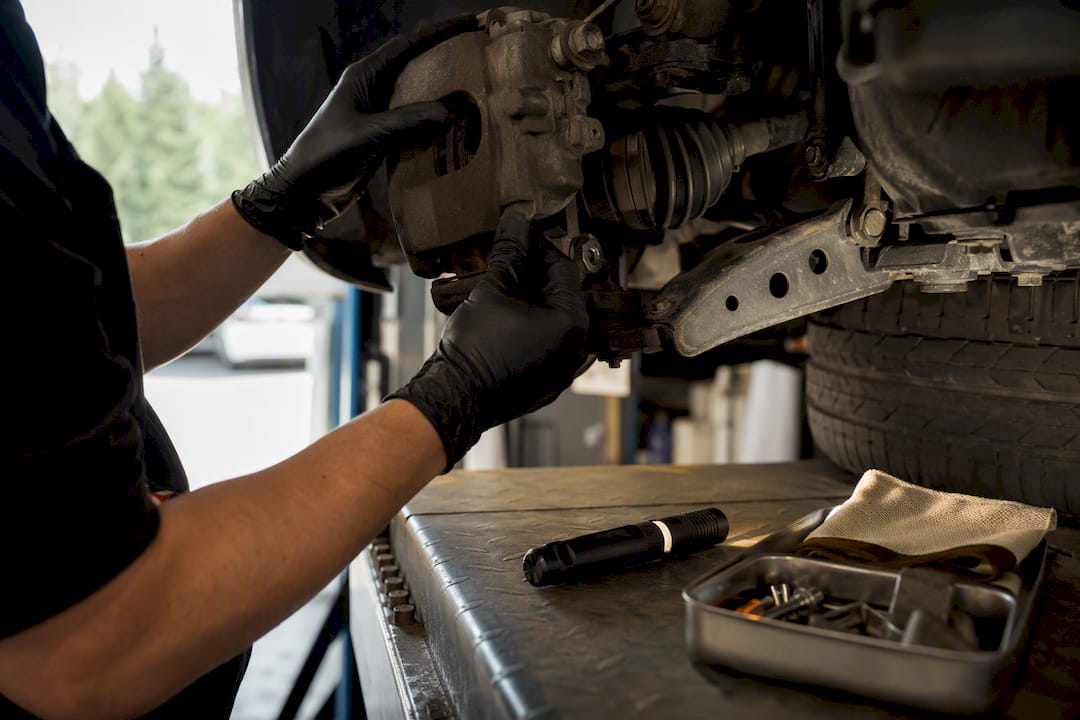
Have the car inspected by an independent mechanic before you finalize anything, especially for vehicles over five years old or above 60,000 miles. An inspection that turns up needed brake work, tire replacement, or a timing belt due for service isn’t just useful information. It’s a specific, itemized reason to ask for a price reduction that the dealer can’t easily dismiss, because the numbers came from a third party, not from you.
What Dealer Tactics Should You Watch For?
Dealers use a predictable set of tactics, and recognizing them in the moment is most of the battle.
The payment-focused pitch steers every conversation toward “What monthly payment works for you?” instead of price or APR. Redirect every time: ask what the out-the-door price is and what the APR is, and decline to discuss payment until both of those are settled.
The four-square worksheet juggles trade-in value, down payment, price, and payment simultaneously, making it hard to track where your savings actually landed. Insist on negotiating one number at a time, in writing, before moving to the next.
Manufactured urgency, claims that another buyer is interested or that a rebate expires today, pressures you into skipping the comparison shopping that protects you. Real deals on real inventory rarely evaporate in an hour. Walk away if needed; a legitimate offer will still be there tomorrow.
The F&I upsell, bundling extended warranties or paint protection into the financing without a clear standalone price, inflates your amount financed. Ask for every add-on’s price in isolation, and decline anything not itemized separately.
Finally, some finance managers will simply avoid the buy rate question entirely, changing topics or offering vague reassurances instead of a number. Ask again, plainly, and if you get no answer twice, treat that as your cue to use outside financing instead.
Does the Time of Month or Year Change Your Leverage?
Timing shifts dealer incentives in ways that directly affect how much room you have to negotiate. Salespeople and dealerships often operate against monthly, quarterly, and manufacturer-set volume targets, and hitting those targets can trigger bonuses for both the salesperson and the dealership itself.
The last few days of the month tend to offer the most flexibility, especially if the dealership is visibly short of its sales quota. The end of a quarter compounds that pressure, since manufacturers frequently tie dealer incentives to quarterly volume. Shopping late in December carries a similar dynamic, driven by annual targets and the push to clear older model-year inventory before new stock arrives.
Model-year transitions matter specifically for used cars too, not just new ones. When a redesigned model launches, trade-ins of the outgoing generation often flood the lot, giving you more comparable inventory and more competitive pricing among similar used vehicles on the same lot.
None of this means you should only shop at month’s end. It means that if your timeline is flexible, aligning your visit with these windows adds leverage you wouldn’t otherwise have, on top of the price and financing groundwork you’ve already done.
How Do You Negotiate Trade-In Value Fairly?
If you’re trading in a vehicle, treat that negotiation as entirely separate from the price of the car you’re buying. Dealers benefit when these two numbers blend together, because a slightly worse trade-in offer is easy to disguise inside a slightly better price on the new purchase.
Get your trade-in appraised independently before you visit the dealership. Online instant-offer services and other dealerships can both give you a number to compare against, and a written competing offer is one of the strongest tools you have. Bring it with you the same way you’d bring a financing pre-approval.
Only discuss your trade-in after you’ve locked in the purchase price of the car you’re buying. Revealing that you have a trade-in too early gives the dealer more numbers to shuffle before you’ve settled the more important figure.
Be specific about condition when you present your vehicle. Clean maintenance records, recent tire or brake replacements, and no unresolved warning lights all support a higher appraisal. If the dealer’s offer comes in meaningfully below your independent quotes, don’t be afraid to sell the trade-in privately or to a competing dealer instead. You lose nothing by keeping that option on the table until the numbers work in your favor.
Baywall’s Perspective: Why a Benchmark Changes the Room
A number you can defend beats a feeling every time. Baywall’s report hands you a benchmark APR, a savings figure, and comparable vehicle pricing you can put on the desk in front of the finance manager. Run a sample analysis before your dealership visit, so you already know your target when the negotiation starts.
— Baywall
Get Your Negotiation Report Before You Sign
Baywall gives you the exact number to bring into that conversation. Enter your credit score, the vehicle, your loan amount, term, and the dealer’s quoted APR, and the report benchmarks it against comparable deals, labels the offer great, fair, or high, and hands you a target APR along with your dollar-savings figure and current pricing on similar vehicles.
Start with the free basic check to see where your offer lands. If the gap between your quote and the benchmark looks meaningful, the $2.99 detailed report adds the comparable vehicle data and negotiation script worth having in hand at the dealership. That’s a small cost against a savings figure that often runs into the hundreds of dollars over your loan term. Run your analysis on Baywall before your next dealership visit, and walk in already knowing what you should pay.
Sources
- Can I negotiate the interest rate on an auto loan with the dealer? | CFPB
- Federal Reserve: Consumer and community context (auto lending markup analysis)
- Financing or leasing a car | FTC
- Auto Lending Abuses in Dealer-Financed Loans | Center for Responsible Lending